


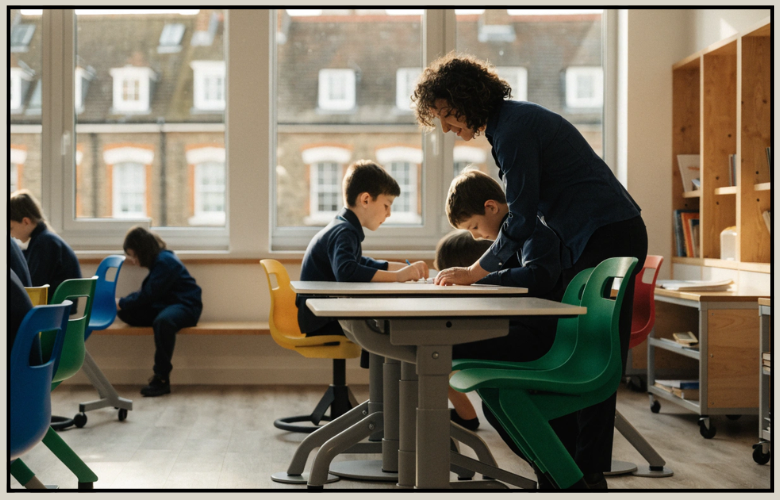
If you’ve ever walked through a school corridor at the end of the day, you’ll know how quickly things get messy. Coats, bags, PE kits and lunch boxes pile up in every available corner. In a city where space is limited, schools often have to make every square metre work hard, so it’s no surprise that storage and seating are getting more attention than they used to.
The good news is that you don’t need a major building project to improve things. Often it starts with taking a fresh look at the school furniture already in place and asking a simple question: is it helping pupils learn, or just taking up room?
Why classroom layout matters
A classroom is a working space for thirty or so people, and the way it’s set up shapes the whole day. Desks that are the wrong height make it harder for children to sit comfortably, and chairs that don’t suit a growing body can lead to fidgeting and tired backs by the afternoon. Teachers notice this quickly. A pupil who can’t get comfortable isn’t likely to stay focused, however good the lesson.
Pupils in the same year group can also vary a lot in height. That’s why adjustable pieces are so useful. Being able to raise or lower a desk or chair means one room can suit a wide range of children without constantly swapping furniture around.
Where do the bags go?
Bags are one of the biggest day-to-day headaches. When they’re dumped on the floor, they block walkways and become a trip hazard. When they’re hung on chair backs, they make the chairs unstable. Neither is ideal in a busy room.
This is where lockers come in. Giving every pupil a secure place for their belongings keeps corridors and classrooms clear, and it helps children keep track of their own things. They also make mornings and home time run a bit more smoothly, because everyone knows exactly where to go instead of hunting through a pile of identical coats.
For younger pupils, lower units at the right height and clear labelling make a big difference. Older students tend to want more space and a bit more privacy, so deeper units with a lock are usually a better fit.
Corridors need a bit of thought as well. Lockers placed in a long, narrow corridor can create a bottleneck at busy times, so it’s worth looking at alcoves, wider areas or spare rooms where queues won’t build up. Even a small change in position can make break times feel calmer.
Making furniture last
Schools are tough on furniture. Chairs get dragged, tables get scratched, and everything gets used every single day. That means durability matters just as much as comfort. Strong frames, wipe-clean surfaces and edges that are rounded rather than sharp all help pieces stand up to daily use.
It’s also worth thinking about how easy things are to move. Many schools now use rooms for more than one purpose, switching between lessons, group work and assemblies. Lightweight chairs that stack and tables that can be rearranged quickly save time and give staff more flexibility.
Practical tips for a refresh
If you’re planning changes, a few simple steps can help you get the most from your budget:
- Walk through the school at different times of day to see where clutter builds up.
- Ask staff and pupils what’s frustrating them. They’ll often point out problems you hadn’t noticed.
- Replace the worst offenders first rather than trying to do everything at once.
- Measure carefully before ordering, so new pieces fit the space and don’t block fire exits or walkways.
- Choose furniture in a range of heights so it suits different age groups.
Looking after pupils’ posture
It’s easy to overlook posture in young people, but habits formed at school can stick. Children now spend a good part of the day at desks, and plenty more time looking down at tablets and phones at home. A well-fitting chair and desk give them the best chance of sitting comfortably, with feet flat on the floor and a back that’s properly supported.
Small details help here too. Making sure screens and books are at a sensible height, and encouraging regular movement breaks, can reduce strain over a long school day.
Comfort and tidiness also have a quiet effect on behaviour. When children have a proper place to put their things and a seat that fits them, there’s simply less to argue about, and staff spend less time reminding pupils to pick up bags or sit properly.
A calmer, tidier school
Better storage and seating won’t solve everything, but they do make a noticeable difference. Classrooms feel calmer, corridors stay clear, and pupils spend less time fiddling and more time getting on with their work. For a school working with limited space and a limited budget, those are worthwhile gains.
Start small, listen to the people who use the building every day, and build from there. Even a few well-chosen changes can make school life a bit easier for everyone.