


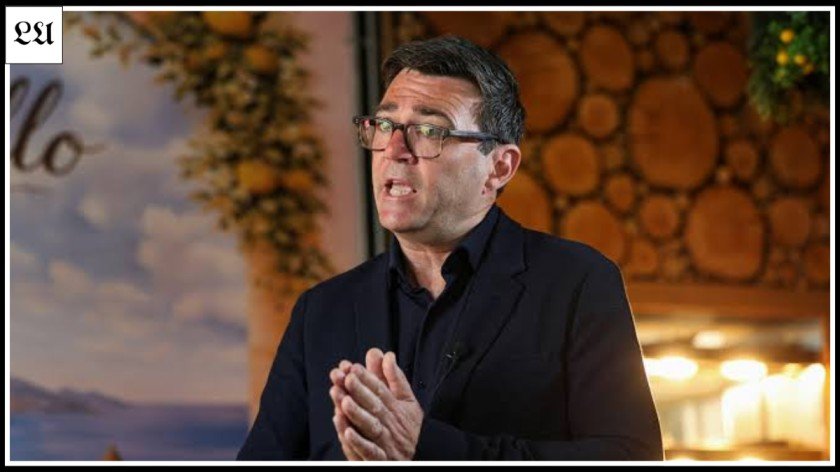
Andy Burnham Immigration policy has become a major focus of British politics as the government attempts to balance tighter border control with the economic need for legal migration. Burnham supports tougher action against illegal migration and backs a new earned-settlement system, while arguing that legal migration cannot always be judged simply as “too high” or “too low”. Instead, he believes immigration levels should partly reflect shortages in the UK economy and public services.
His position has also reopened debate about Brexit. Burnham argues that leaving the European Union changed the nature of migration to Britain and did not necessarily deliver the control voters expected. However, he has explicitly denied proposing an immediate return to EU freedom of movement. His overall approach combines enforcement, economic necessity, contribution and a willingness to reconsider how Britain manages migration over the longer term.
What Is Andy Burnham’s Current Position on Immigration?
Andy Burnham supports controlled immigration rather than either open borders or a system driven entirely by one fixed migration target. He distinguishes between legal migration, irregular migration, asylum and permanent settlement because each raises different economic and political questions.
Burnham has backed stronger measures against illegal migration and supports consequences for people who breach immigration rules. At the same time, he argues that legal migration may remain necessary when employers or public services cannot find enough workers domestically.
This means his immigration policy combines tighter enforcement with continued legal routes where Britain has genuine labour shortages.
His broader argument is that public confidence can only be restored if people believe immigration is being managed effectively, but he does not believe that control automatically requires treating every form of migration in exactly the same way.
What Did Andy Burnham Say About Immigration Levels?
Burnham attracted significant political attention after saying it was “difficult to say” whether the current level of legal migration was simply too high or too low. He explained that the appropriate level should partly depend on gaps in the British economy.
This is an important part of his immigration philosophy.
Burnham does not argue that immigration numbers are irrelevant. Instead, he believes policymakers need to understand why people are coming to Britain and whether their skills are genuinely required.
For example, reducing overseas recruitment rapidly could create problems where the NHS, education or other sectors cannot immediately recruit enough domestic workers.
His position therefore focuses on the composition and purpose of migration, rather than treating the headline net migration figure as the only measure of whether the immigration system is working.
Does Andy Burnham Want Immigration Reduced?
Burnham supports reducing illegal migration and unnecessary dependence on overseas workers, but he has resisted promising a single numerical target for legal migration.
His approach can broadly be summarised as follows:
- Reduce illegal and irregular migration.
- Strengthen enforcement against immigration abuse.
- Ensure legal migration reflects genuine labour shortages.
- Invest in British workers and skills to reduce long-term dependence on overseas recruitment.
- Reward migrants who make significant economic or public-service contributions.
- Apply tougher settlement conditions to people who breach immigration rules.
- Restore public confidence that the immigration system is controlled.
This makes his position different from policies focused exclusively on cutting total migration as quickly as possible.
Burnham’s argument is that sustainable reductions require domestic workforce planning. Otherwise, restricting immigration without addressing skills shortages could create serious problems for businesses and essential public services.
What Is Andy Burnham’s Position on Illegal Migration and Small Boats?
Burnham supports tougher action against illegal migration, including people entering Britain through unauthorised Channel crossings.
Small boats remain one of the most politically sensitive parts of the immigration debate because they involve dangerous journeys, organised smuggling networks and significant pressure on Britain’s asylum system.
The government’s 2026 Immigration and Asylum Bill is designed to reduce illegal arrivals, increase removals of people with no right to remain and reform the asylum appeals system. It also includes changes relating to Article 8 of the European Convention on Human Rights and the modern slavery framework.
Burnham also argues that Britain needs stronger cooperation with European countries.
His position is that immigration enforcement is not simply a domestic issue. Effective border control also depends on intelligence sharing, cooperation against people-smuggling networks and agreements with neighbouring governments.
What Are the New UK Earned Settlement Rules?
The government’s new earned-settlement system represents one of the most significant recent changes to UK immigration policy.
Under reforms announced on 2 November 2026, permanent settlement will no longer normally be available automatically after five years for many migrants. Instead, the standard route will increase to 10 years, with shorter or longer pathways depending on contribution, character and immigration compliance.
The highest earners can qualify after three years. People earning above the specified higher-income threshold and some public-service workers, including doctors, nurses and teachers, can qualify after five years.
Migrants who breach immigration rules may have to wait at least 20 years.
The government says the principle behind the reforms is that settlement should be earned through contribution rather than awarded mainly according to the amount of time someone has lived in Britain.
What Conditions Must Migrants Meet for Settlement?
The earned-settlement reforms introduce several core conditions for people seeking permanent status in Britain.
Applicants will generally need to demonstrate good character, strong English-language ability, no outstanding debt to the taxpayer and a sustained record of National Insurance contributions.
The system then differentiates between applicants according to contribution.
This means that time spent living in Britain will no longer be the only major factor determining when many migrants can receive indefinite leave to remain.
The government argues that this will make permanent residence more closely connected to economic participation, integration and compliance with British immigration rules.
Critics may question whether earnings and employment always provide a fair measure of contribution, particularly because many socially valuable occupations are relatively poorly paid.
That debate is likely to remain important as the reforms are implemented.
How Will the Settlement Rules Affect Public-Service Workers?
Some public-service workers will receive more favourable treatment under the new settlement system.
Doctors, nurses, teachers and certain other workers who meet the relevant conditions can remain on a five-year pathway instead of the new standard 10-year route.
This reflects the government’s argument that contribution should be measured by more than salary alone.
Healthcare and education remain heavily dependent on workers from overseas, and immediately placing all such employees on longer settlement routes could create recruitment and retention difficulties.
The government has also introduced specific provisions for care workers who arrived under previous arrangements and met their visa conditions.
These exceptions illustrate one of the main principles behind Burnham’s approach: immigration control should become tougher overall, but migrants making particularly valuable contributions to Britain may receive more favourable treatment.
How Are Illegal Entry and Refugee Settlement Treated?
The new settlement system draws a sharp distinction between people arriving through approved routes and those entering through clandestine or unsafe routes.
Refugees arriving through government-approved safe and legal schemes can qualify for settlement after five years. Other refugees generally face a longer route, although employment or study can reduce the waiting period in certain circumstances.
People who enter Britain by small boat or another clandestine method can face an additional settlement penalty.
The government says this distinction is intended to discourage dangerous crossings while maintaining legal routes for genuine refugees.
Burnham supports the principle that the immigration system should reward people who follow authorised procedures while imposing stronger consequences where rules are broken.
However, refugee and migrant organisations are likely to continue scrutinising how these rules operate in practice, particularly for people fleeing conflict or persecution.
Andy Burnham and Shabana Mahmood’s Immigration Reforms
Burnham has strongly supported Home Secretary Shabana Mahmood’s broader immigration reforms.
He has endorsed the principle that permanent residence should be earned and has said that people making particularly valuable contributions to Britain should have the opportunity to settle sooner.
The reforms attempt to create clearer differences between high contributors, standard migrants, immigration offenders and people entering through irregular routes.
Mahmood has argued that the immigration system should be fair both to migrants who follow the rules and to British citizens.
Burnham’s support is politically important because immigration remains an area where Labour faces pressure from several directions.
Some voters want substantially lower immigration, while employers and public services continue to depend on international workers.
At the same time, Labour MPs, unions and migrant-rights groups may object if reforms are seen as unfairly penalising established migrants.
Why Is Contribution Central to Andy Burnham Immigration Policy?
Contribution is one of the most important concepts in Andy Burnham Immigration policy.
Burnham’s government increasingly wants permanent settlement to reflect what migrants contribute economically and socially rather than relying almost entirely on how many years they have spent in Britain.
This contribution can include employment, taxation, National Insurance payments and work in important public services.
Supporters argue that this approach creates a clearer connection between immigration and Britain’s national interests.
However, defining contribution is complicated.
A highly paid professional may contribute significantly in tax, but a lower-paid care worker can also perform work that is essential to vulnerable people and the wider healthcare system.
For this reason, the government has included some occupation-based exceptions alongside income thresholds.
The central challenge will be ensuring that contribution is assessed broadly enough to recognise economic value without overlooking social and public-service value.
What Has Andy Burnham Said About Brexit and Immigration?
Burnham argues that Brexit changed the nature of immigration to Britain without necessarily giving the country the degree of control promised during the referendum debate.
He has said that shorter-term European migration was increasingly replaced by longer-term settlement from elsewhere after Brexit.
Before Britain left the European Union, freedom of movement allowed EU citizens to work and live in the UK relatively easily.
After Brexit, Britain replaced that system with a visa-based immigration framework that increased recruitment from countries outside Europe.
Burnham argues that the resulting migration has often been more permanent.
His position is not that pre-Brexit immigration was problem-free. Instead, he wants the country to examine whether the system introduced after Brexit delivered the intended results.
This makes Brexit an important part of his wider immigration argument.
Does Andy Burnham Want EU Freedom of Movement Back?
Burnham has explicitly denied proposing the restoration of EU freedom of movement during the current parliament.
On 3 November 2026, he said he had not proposed bringing freedom of movement back and stressed that the public should ultimately determine Britain’s future relationship with the European Union.
Labour’s existing commitments continue to rule out returning to the EU single market, customs union and freedom of movement during this parliament.
However, Burnham also believes there should be an honest discussion about Britain’s longer-term relationship with Europe.
This is an important distinction.
He is not currently advocating the immediate restoration of unrestricted EU migration, but he is willing to reconsider how Britain and Europe cooperate in future.
Any significant move towards deeper European economic integration could eventually raise questions about mobility rights and migration.
Why Does Burnham Say Brexit Made Immigration Control Harder?
Burnham has argued that Brexit affected Britain’s ability to cooperate with European partners on migration and border management.
He has specifically pointed to reduced access to European data-sharing arrangements as one factor that can make illegal migration more difficult to manage.
Modern immigration enforcement depends on more than physical border checks.
Governments also rely on intelligence sharing, databases, policing cooperation and agreements about returning people who have no legal right to remain.
Burnham believes closer European cooperation could improve Britain’s ability to manage illegal migration while maintaining control over domestic immigration policy.
This argument is politically sensitive because opponents may interpret closer cooperation as an attempt to reverse Brexit.
Burnham has therefore emphasised that any fundamental future changes should have public support rather than being imposed without democratic consent.
How Does Andy Burnham Link Immigration to the UK Economy?
Burnham believes immigration policy must reflect economic reality.
Businesses and public services sometimes recruit overseas because they cannot find enough suitably trained workers domestically. This is particularly relevant in sectors such as healthcare, education and specialised industries.
Burnham therefore argues that the number of legal migrants entering Britain should respond partly to genuine gaps in the economy.
However, this does not mean permanent dependence on overseas recruitment.
A sustainable immigration strategy also requires investment in British workers, education, vocational training and productivity.
The longer-term objective is to reduce the need for migration where domestic recruitment can realistically meet demand.
This approach tries to avoid two extremes: accepting high immigration indefinitely because businesses demand workers, or reducing migration so rapidly that essential sectors face severe shortages.
For Burnham, immigration and economic policy therefore cannot be considered separately.
Why Are the NHS and Public Services Important to the Debate?
The NHS demonstrates why immigration remains difficult to separate from workforce planning.
Britain relies heavily on internationally recruited doctors, nurses and other healthcare professionals. Education and social care also employ substantial numbers of overseas workers.
Removing access to international recruitment before enough British workers are trained could worsen staffing pressures.
This helps explain why the new settlement framework gives some healthcare and education workers shorter routes to permanent residence than the standard 10-year pathway.
Burnham’s broader argument is that the country should recognise people who make valuable contributions while simultaneously building a stronger domestic workforce.
The challenge is achieving both goals.
If Britain becomes permanently dependent on overseas recruitment, migration pressures may remain high. If immigration restrictions become too severe, public services may struggle to recruit and retain enough staff.
How Does Andy Burnham’s Approach Differ from Reform UK?
Burnham and Reform UK both argue that Britain needs stronger immigration control, but they differ significantly over how that objective should be achieved.
Reform politicians generally advocate much sharper reductions in immigration and a more restrictive approach to migration and settlement.
Burnham places greater emphasis on economic demand and differentiating between migrants according to their circumstances and contribution.
His government supports tougher enforcement and longer settlement routes while preserving faster pathways for some skilled and public-service workers.
This difference reflects a wider political question: should immigration primarily be reduced according to numerical targets, or should migration levels adjust according to economic requirements?
Burnham clearly leans towards the second approach for legal migration while supporting significantly tougher measures against illegal entry.
That distinction is likely to remain politically important because Reform continues to pressure Labour over both legal and irregular migration.
Is Andy Burnham Trying to Please Both Sides of the Immigration Debate?
Critics argue that Burnham’s immigration position risks attempting to satisfy voters on opposing sides of the issue.
People demanding tougher controls can point to longer settlement periods, stricter eligibility requirements and stronger penalties for illegal entry.
Meanwhile, people who emphasise migrant contribution can point to favourable routes for doctors, nurses, teachers, high earners and some other workers.
Supporters describe this as pragmatic policymaking rather than inconsistency.
Immigration involves very different categories of people, from highly skilled workers and refugees to students and irregular arrivals. Applying one identical rule to every category could therefore create unintended consequences.
The success of Burnham’s approach will depend on whether the government can demonstrate genuine control while maintaining the workers Britain needs.
If migration remains high without clear benefits, political criticism could intensify. If controls become too restrictive, economic and public-service problems may create different pressures.
Why Is Andy Burnham Immigration Policy Politically Significant?
Andy Burnham Immigration policy matters because it represents an attempt to redefine the British immigration debate.
Instead of focusing solely on whether total migration should rise or fall, Burnham is placing more emphasis on the type of migration, contribution, labour shortages, settlement and compliance with the rules.
This approach also connects immigration directly with Brexit.
Burnham argues that Britain’s post-Brexit system created different forms of migration pressure and that policymakers should judge the system according to its actual outcomes.
The political stakes are substantial.
Labour faces pressure from Reform UK and Conservative voters demanding stronger immigration controls while also needing to retain support among businesses, public services and voters concerned about fairness.
Immigration therefore represents both a major policy challenge and an important test of Burnham’s leadership.
His ability to combine control, economic necessity and public confidence could shape the wider direction of British migration policy.
(FAQs)
What did Andy Burnham say about immigration?
Burnham has said it is difficult to describe legal migration simply as too high or too low because the appropriate level depends partly on labour shortages and economic demand. He supports stronger controls on illegal migration while maintaining legal routes where Britain genuinely requires overseas workers.
Does Andy Burnham want immigration reduced?
Burnham supports reducing illegal migration and Britain’s unnecessary dependence on overseas recruitment. However, he does not support judging legal migration exclusively through one numerical target. His position is that migration should respond to economic needs while Britain trains more domestic workers over the longer term.
Does Andy Burnham support EU freedom of movement?
Burnham has said he has not proposed restoring freedom of movement during the current parliament. Labour’s existing commitments continue to rule it out, although he believes Britain should have a longer-term discussion about its future relationship with Europe and how Brexit changed migration.
What are the new UK settlement rules?
Many migrants will move to a standard 10-year settlement pathway under the earned-settlement model. Higher earners and some public-service workers can qualify earlier, while people who breach immigration rules or arrive through irregular routes may face considerably longer waits.
What does Andy Burnham think about small boats?
Burnham supports tougher action against irregular Channel crossings. His government wants to discourage unsafe and illegal routes while expanding controlled legal routes for genuine refugees. Settlement rules also impose substantially longer qualifying periods on some people who enter Britain through clandestine routes.
Why does Andy Burnham link Brexit with immigration?
Burnham argues that Brexit changed the composition of migration. He believes shorter-term European migration was replaced partly by longer-term settlement from outside the EU and that leaving European cooperation arrangements also made certain aspects of migration enforcement more difficult.
Is Andy Burnham left wing or right wing?
Burnham is a Labour politician generally associated with the centre-left. His immigration policy nevertheless combines policies from different traditions, including stronger enforcement and tougher settlement conditions alongside protection for legal migration that supports public services and the economy.
Conclusion
Andy Burnham’s immigration approach combines stronger enforcement with a more selective and contribution-based legal migration system. He supports tougher action against illegal entry, longer pathways to settlement for many migrants and preferential routes for certain skilled workers and people serving important public services. At the same time, he has resisted describing all legal migration simply as too high or too low because he believes workforce shortages and economic needs also matter.
The Andy Burnham Immigration debate is equally important because of its connection with Brexit. Burnham argues that leaving the EU altered Britain’s migration patterns without necessarily delivering the control many voters expected, although he has ruled out an immediate return to freedom of movement. His wider strategy therefore rests on four themes: control, contribution, economic necessity and public confidence. Whether that combination can satisfy voters while protecting Britain’s economy and essential services will remain a major political test.