


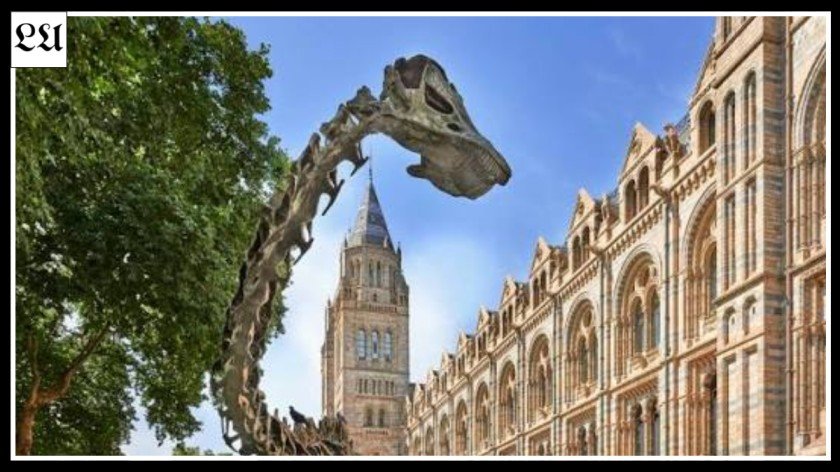
Natural History Museum, London is one of the best known tourist spots in the city, providing visitors a wonderful opportunity to take a fascinating tour on dinosaurs, wildlife, evolution of man, minerals and geological history of the earth. Situated within a Victorian building in South Kensington, this museum attracts tourists, students, photographers and other interested people of all age groups. Admission to this museum is free of cost, although it is better to book timed tickets online during busy periods. It becomes easy to plan a visit to this museum due to its huge size and large number of exhibits..
Natural History Museum London Tickets, Free Entry and Online Booking
People searching for natural history museum London tickets are often pleased to discover that general admission to the permanent galleries is free. Visitors can normally explore Hintze Hall, the Dinosaur Gallery, the Earth displays, mammals, minerals, meteorites and many other collections without purchasing a standard entrance ticket. Free admission makes the museum especially valuable for families and travellers who want an affordable activity in central London. However, free entry does not always mean immediate entry without planning. The building attracts large numbers of visitors, particularly during weekends, school holidays, bank holidays and rainy days. Capacity may be controlled when the museum becomes busy, so reserving a free timed-entry ticket is strongly recommended. People arriving without a booking may still be admitted when space is available, but they could experience longer queues or be asked to wait until visitor numbers decrease.
The phrase natural history museum london free applies mainly to the permanent public galleries rather than every experience offered inside the building. Temporary exhibitions, guided tours, evening events, behind-the-scenes experiences and selected family activities may require separate paid tickets. These optional experiences can provide additional depth, but they are not essential for an enjoyable first visit. The permanent collection contains enough exhibits to fill several hours, meaning visitors can experience the museum’s main highlights without paying an admission fee. Before purchasing a temporary exhibition ticket, consider the subject, age guidance, duration and total cost for the group. A reasonably priced individual ticket can become expensive for a large family. Visitors should also check whether the activity operates at a fixed time because arriving late may reduce the experience or prevent admission.
Booking natural history museum london tickets online is usually the most convenient option. Visitors can select a date and available arrival period before saving the confirmation on a mobile phone. Taking a screenshot is sensible because mobile internet can occasionally be unreliable inside large buildings. A timed admission ticket helps guarantee entry to the museum, but it does not reserve access to every individual gallery. Popular areas, particularly the dinosaur displays, can still develop internal queues after visitors enter. Arrive near the selected time while allowing extra time for Underground delays, security checks and finding the correct entrance. Anyone attending a paid exhibition should leave enough space between general admission and the event start time. A successful visit begins with a confirmed ticket, comfortable timings and a short list of priority galleries rather than an inflexible schedule.
Natural History Museum London Opening Times and Christmas Visits
The standard natural history museum london opening times are from 10:00 am until 5:50 pm, with final entry at 5:30 pm. Arriving shortly before last entry is not suitable for a first visit because galleries begin closing soon afterwards and visitors may be asked to move towards the exits. A highlights visit normally needs at least two hours, while three to four hours provides a more relaxed experience. Opening arrangements can occasionally change because of maintenance, private events or exceptional circumstances, so checking current information shortly before travelling is sensible. Individual galleries may also close temporarily even when the main museum remains open. Visitors should therefore choose several priority areas instead of building the entire day around one exhibit. A flexible route makes it easier to continue enjoying the museum if a gallery is crowded or unavailable.
People planning a natural history museum london christmas visit should remember that the museum closes from 24 to 26 December. It may operate during other parts of the festive season, but exhibition schedules, winter events and visitor arrangements can vary from year to year. The days between Christmas and New Year may become particularly busy because schools are closed and families are searching for indoor activities. Free timed tickets should be reserved as early as possible for these dates. Visitors should also confirm whether cafés, shops and paid experiences are following their normal schedules. Seasonal activities may require separate tickets, even when general admission remains free. Relying on details from a previous Christmas can cause problems, so always check the programme for the year in which the visit will take place.
Weekday mornings are generally the best time to visit. Arriving close to 10:00 am allows families to reach the Dinosaur Gallery or another popular area before larger crowds develop. Tuesday, Wednesday and Thursday mornings can feel calmer than weekends, although school groups may be present during term time. Saturday afternoons, rainy Sundays and school-holiday dates are often the busiest periods because the museum is both free and mainly indoors. Late afternoon can become quieter, but the limited time means visitors must follow a focused route. Starting around lunchtime is less convenient because the entrance, cafés, toilets and major galleries may all be busy at the same time. The most reliable strategy is to book an early entry, select one must-see exhibit and visit it immediately after entering.
Natural History Museum London Map, Building and Getting There
A natural history museum london map is extremely useful because the building is large, spread over several levels and divided into many galleries. The museum is located on Cromwell Road in South Kensington, an area well known for major cultural attractions. South Kensington Underground station is the most commonly used stop and is served by the Piccadilly, District and Circle lines. Gloucester Road is another practical station and can sometimes provide a less crowded approach. Several bus routes also serve the surrounding area, while driving is usually less convenient because of central London traffic, limited parking and possible charges. Visitors should download or photograph the museum map before arriving and mark three to five priority areas. Using the map to reduce unnecessary walking is more helpful than treating every room as an item that must be completed.
The natural history museum london building is an important attraction in its own right. It opened in 1881 and was designed by Alfred Waterhouse, who combined Romanesque architecture with Gothic Revival influences and decoration inspired by the natural world. The exterior features towers, arches and detailed terracotta, while the interior includes animals, plants and natural forms across columns, ceilings and walls. The use of terracotta was decorative but also practical because it could cope with the polluted conditions of Victorian London. The building was designed as a “cathedral to nature”, creating a sense of wonder before visitors reached the main scientific collections. Looking closely at the architecture reveals that the museum is not simply a container for fossils and animals; the entire structure supports its educational purpose.
Visitors should begin by identifying the most suitable entrance for their route, accessibility requirements and crowd conditions. Do not automatically join the longest visible queue without checking signs or asking a member of staff. Once inside, use Hintze Hall as a central reference point, but avoid repeatedly returning to it when nearby galleries can be grouped together. A sensible route might begin with dinosaurs, continue towards the Stegosaurus and Earth displays, then return through Hintze Hall before moving towards mammals or human evolution. Visitors with mobility requirements should ask for the most direct step-free route because a path that looks short on the map may contain stairs. Groups should also agree on a clearly named meeting location in case anyone becomes separated. A specific entrance or information point is more useful than a general instruction such as “meet near the dinosaurs”.
Best Galleries, Dinosaurs and Must-See Exhibits
Hintze Hall provides the museum’s most dramatic first impression. Suspended above the central space is Hope, a 25-metre blue whale skeleton that demonstrates the extraordinary scale of the largest animals on Earth. The display also represents conservation because blue whale populations were severely harmed by commercial hunting. Visitors should view the skeleton from the ground floor before climbing the main staircase for a higher perspective. Hintze Hall also contains an American mastodon, an Atlantic blue marlin, ancient coral, a rock as old as the Solar System and a remarkably complete Mantellisaurus fossil. Many people pass through too quickly because they are eager to reach the dinosaurs. Spending twenty minutes examining several objects and studying the hall’s architecture provides a much richer introduction to the museum.
The Dinosaur Gallery remains the leading attraction for many families. Fossils, bones, models and skeletons explain how dinosaurs moved, ate, reproduced and adapted to their environments. The roaring animatronic Tyrannosaurus rex uses darkness, movement and sound to create a dramatic experience, although very young children may find it intense. Parents can prepare sensitive children by explaining that the model is not real and that it will move and make noise. Visitors should not rush directly to the T. rex while ignoring the smaller exhibits. Fossilised teeth reveal diet, footprints suggest movement and bone structures help scientists reconstruct extinct animals. Sophie the Stegosaurus is another essential specimen because its unusually complete skeleton allows visitors to understand the animal’s true proportions, back plates and defensive tail spikes.
The museum offers far more than dinosaurs. The Earth galleries explain volcanoes, earthquakes, rocks, minerals and the changing surface of our planet. Human-evolution displays use fossils, reconstructions and ancient tools to explore how modern humans developed over millions of years. Mammal collections allow visitors to compare skeletons, teeth and physical adaptations across animals from different habitats. Meteorites connect Earth science with astronomy by preserving evidence from the early Solar System. The mineral galleries contain colourful crystals, gemstones and metals that appeal to geology enthusiasts, designers and photographers. Outdoor gardens provide a quieter environment where visitors can explore biodiversity and the history of life. First-time visitors should choose at least one less-famous gallery because these calmer collections often become the most surprising part of the day.
Planning a Family-Friendly, Accessible and Photogenic Visit
Families should plan according to the age, energy and interests of their children rather than attempting to cover the whole museum. A practical family route might include dinosaurs, the blue whale, mammals and the gardens, with a food or toilet break after approximately ninety minutes. Toddlers usually respond more strongly to large animals, colour, sound and movement than to detailed written explanations. Older children can compare teeth, identify adaptations or choose the object they found most surprising. Short observation games are more effective than asking children to read every information panel. Parents should carry only essential belongings because heavy bags and crowded galleries can make movement difficult. A buggy may be useful, although lifts and narrow spaces may require patience. The quality of the visit should be measured by curiosity and enjoyment rather than the number of rooms completed.
The museum provides step-free routes, lifts, accessible toilets and facilities for wheelchair users and visitors with buggies. Because the building is historic and extensive, some accessible routes may take longer than routes using staircases. Asking staff for directions is often easier than trying to work out every connection from the map. Certain displays include darkness, loud sounds, moving models or confined spaces, which may affect visitors with sensory sensitivities. An early weekday visit generally provides a calmer environment. Relaxed sessions may also be available on selected dates for neurodivergent visitors and their families. Visitors with specific mobility, sensory or companion-ticket requirements should review current accessibility guidance before travelling. Building rest periods into the route can make a significant difference for children, older visitors and anyone who becomes tired in busy environments.
People searching for natural history museum london photos will find strong opportunities both inside and outside the building. The exterior façade is best photographed from the open area facing the central entrance, where the towers and large arch can be framed symmetrically. Inside, Hintze Hall offers the most recognisable view, with the whale skeleton, staircase and detailed ceiling creating several possible compositions. Upper balconies provide wide photographs, while the ground floor creates a stronger impression of scale. Visitors should also look for smaller details, including terracotta animals, fossil textures, minerals and repeating architectural patterns. Early morning usually provides cleaner photographs with fewer people. Flash may be restricted in some areas, particularly temporary exhibitions, so displayed instructions must be followed. Photographers should work quickly and avoid blocking walkways or preventing other visitors from seeing an exhibit.
Benefits, Real-Life Uses, Pros and Cons: Is It Worth It?
The museum’s main benefit is access to high-quality scientific learning without a compulsory entrance charge. Real fossils, skeletons, meteorites and minerals make difficult subjects easier to understand than pictures alone. A child studying adaptation can compare teeth and limbs, while a geography student can connect volcanoes and earthquakes with classroom lessons. Adults may explore conservation, architecture, geology or human evolution at a deeper level. The museum also works well for mixed-age groups because different visitors can enjoy the same object for different reasons. Children may focus on size and movement, parents may value educational explanations and older relatives may appreciate the architecture. A visit can inspire further reading, school projects, creative work or an interest in science-related careers. It provides both planned education and unexpected discovery.
The museum can support many real-life visit types. A family with young children could spend three hours exploring dinosaurs, the whale, mammals and the gardens. A student preparing a project could follow a route focused on rocks, evolution or environmental change. An architecture enthusiast might spend the first hour studying Alfred Waterhouse’s exterior, terracotta decoration and central hall. A solo traveller could explore quieter galleries at a slower pace without following another person’s priorities. A tourist with limited time could complete a focused two-hour route before visiting another South Kensington attraction. London residents can return several times, selecting a different scientific subject on each visit. These examples show that the most effective itinerary depends on personal interests, available time, mobility and tolerance for crowds rather than one universal sightseeing checklist.
Main advantages:
- Free admission to permanent galleries
- Famous dinosaur and blue whale displays
- Excellent educational value for different ages
- Impressive Victorian architecture
- Useful indoor option during poor weather
- Central location near other major museums
- Accessible facilities and family services
- Enough variety for repeat visits
Possible disadvantages:
- Large crowds during weekends and holidays
- Internal queues for popular exhibits
- A layout that can initially feel confusing
- Busy cafés and shops at peak times
- Separate charges for selected exhibitions
- Long visits can become physically tiring
So, is the Natural History Museum, London worth visiting? For most families, students and tourists, the answer is clearly yes. Its combination of science, architecture, entertainment and free general admission provides exceptional value. The experience becomes less enjoyable when people arrive at the busiest time, carry heavy bags and attempt to see every gallery. Most disadvantages can be reduced through advance booking, early arrival, comfortable footwear and a focused route. Visitors should choose three to five essential areas and treat everything else as an unexpected bonus. Paid exhibitions can add depth, but they are not necessary for an excellent first visit. When approached as a place for exploration rather than a checklist, the museum ranks among the most rewarding cultural attractions in central London.
Frequently Asked Questions
Is the Natural History Museum London free?
Yes, general admission to the permanent galleries is free. Booking a free timed-entry ticket online is recommended during busy periods.
Which is better, the British Museum or the Natural History Museum?
The British Museum is better for ancient history and archaeology. The Natural History Museum is ideal for dinosaurs, wildlife, fossils and Earth science.
What London museum has dinosaurs?
The Natural History Museum in South Kensington has London’s best-known dinosaur collection. It includes fossils, skeletons and an animatronic Tyrannosaurus rex.
Which Tube station is best for the Natural History Museum?
South Kensington is the closest and most convenient Tube station. Gloucester Road is another suitable option within walking distance.
Do you need to book Natural History Museum London tickets online?
Online booking is strongly recommended, especially on weekends and school holidays. Paid exhibitions and special events may require separate tickets.
Conclusion
The Natural History Museum, London, is one of the city’s best family destinations for education and entertainment. The museum’s free permanent exhibitions, iconic dinosaur fossils, the blue whale skeleton and beautiful Victorian architecture are what make the visit both informative and fun. By preparing for the visit in advance, a person can enjoy the experience even more, and it is advisable to arrange a booking for entry tickets, reach the destination in advance and select some priority exhibitions. People must take into account that there will be time for rest, photos and less crowded exhibitions other than the ones with dinosaurs.