


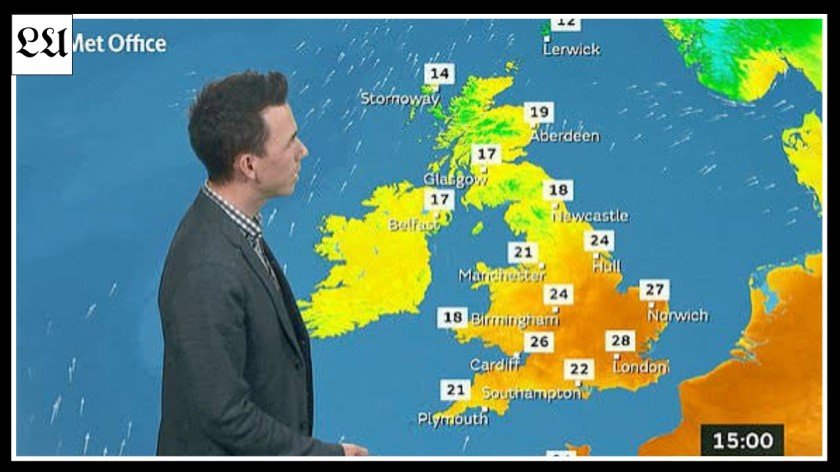
The London weather check tomorrow will enable the locals, travelers and tourists to make their plans. The weather can determine the clothes you wear, travel duration, routes of sightseeing, outdoor arrangements and family plans among others. London weather can be different depending on whether you are at the busy streets, in the parks, at the riverside or at the Underground. A chilly morning might change into a hot afternoon, therefore, the need to check hourly temperatures. This guide provides an overview of the weather, likelihood of rain, morning weather and long range forecast for the next 10 to 15 days.
London Weather Tomorrow Overview for Sunday, 2 August 2026
Sunday is forecast to be mainly cloudy and very warm across London. The expected maximum temperature is approximately 27°C, while the overnight minimum should remain near 17°C. Conditions may appear grey at times, but the temperature should still rise steadily through the morning and afternoon. Heavy or prolonged rainfall is not the leading feature of the current city-wide outlook. Most journeys and leisure plans should therefore remain possible with basic warm-weather preparation.
The day may feel different across London because the capital covers a large geographical area. Central districts often feel warmer because roads, glass buildings and paved surfaces absorb heat during the day. Parks, riverside paths and outer neighbourhoods may feel fresher when there is more shade or airflow. A local shower could also affect one borough without reaching every part of the city. People with location-specific plans should check the postcode forecast rather than relying only on a general London summary.
Morning is likely to provide the most comfortable conditions for longer outdoor activities. Temperatures should become warmer towards the afternoon, particularly between about 2 pm and 5 pm. The evening is expected to remain mild rather than turning cold immediately after sunset. This should suit restaurant bookings, theatre visits, riverside walks and other social plans. A light cardigan or overshirt may still be useful for people returning home late.
London Weather Tomorrow Hourly and Morning Conditions
The London weather tomorrow hourly forecast is more useful than looking only at the daily maximum. Early temperatures should remain well below the expected afternoon high, creating a relatively fresh start. Around sunrise, conditions may sit near 17°C before gradually moving through the high teens. By late morning, the temperature should enter the low twenties and continue rising. People leaving home early should therefore avoid choosing heavy clothing based only on the first cool feeling outside.
The London weather tomorrow morning outlook should suit walking, running, cycling and outdoor sightseeing. Between approximately 7 am and 10 am, the air is likely to feel more comfortable than it will later. A thin jacket, cardigan or overshirt may help at the beginning of the day. It should be easy to fold and carry once the temperature rises. Tourists can use these cooler hours for bridges, parks, outdoor markets and neighbourhood walking routes.
By midday, conditions should feel noticeably warmer, even when the sky remains cloudy. The temperature is expected to continue rising during the afternoon and reach about 27°C at its highest point. Many people assume noon is always the hottest time, but roads and buildings continue storing heat after midday. The warmest period can therefore occur several hours later. Temperatures should then fall gradually through the evening, leaving London mild rather than chilly.
London Weather Tomorrow Rain, Cloud and Real-Feel Conditions
The London weather tomorrow rain outlook does not currently indicate a day dominated by widespread, persistent rain. Mainly cloudy conditions are expected, but cloud cover alone does not mean that rainfall will occur. Some neighbourhoods may remain dry throughout the day, while another area could experience a brief local shower. People attending an outdoor event may still find a compact folding umbrella useful. A heavy waterproof coat is less practical because the afternoon should remain very warm.
Cloudy weather can offer several advantages during a warm summer day. It may reduce continuous direct sunshine and make outdoor walking more comfortable. Softer light can also improve portraits and photographs of buildings by reducing strong shadows. However, people should not assume that clouds completely remove ultraviolet exposure. Sunscreen can remain useful when spending several hours outside, particularly around midday and during brighter intervals.
The official temperature does not always describe how conditions will feel in real situations. A forecast of 27°C may feel pleasant in an open park with trees and a gentle breeze. The same temperature may feel much warmer on a crowded platform, inside a bus or along a street surrounded by tall buildings. Humidity, wind, physical activity and clothing can all change personal comfort. Planning should therefore reflect the activity and location, not simply the headline temperature.
What to Wear and How to Plan Travel and Activities
Light, breathable clothes should work well for most of the day. Cotton shirts, loose tops, lightweight trousers, skirts, shorts and summer dresses can help people remain comfortable. A thin removable layer is useful for the cooler morning and air-conditioned indoor venues. Comfortable footwear is especially important because London journeys often include stairs, long station corridors and unexpected walking. Heavy coats, thick jumpers and uncomfortable formal shoes are unlikely to be practical for a full day outside.
A small day bag can contain the following essentials without becoming too heavy:
- A reusable bottle of water
- A lightweight removable layer
- A compact folding umbrella
- Sunscreen for extended outdoor periods
- Sunglasses for brighter intervals
- Comfortable walking shoes
- A portable phone charger
- Necessary personal medication
- Contactless payment or a travel card
- Light snacks for children or long journeys
The best schedule places longer walks and exposed outdoor activities in the morning. Museums, galleries, shopping centres and covered markets can provide a comfortable break during the warmer afternoon. Public transport may feel hotter than the outdoor temperature, so travellers should carry water and leave enough time to avoid rushing. Families can visit parks or playgrounds early and move indoors later. Evening temperatures should remain suitable for outdoor dining, entertainment and riverside plans.
Weather in London 10 Days and Weather London 14 Days
People searching for weather in London for 10 days are often preparing for a trip, event or important appointment. A 10-day forecast can reveal a general trend, such as whether temperatures may remain warm or whether a more unsettled period could develop. The available eight-day outlook currently shows temperatures remaining generally warm after Sunday. Monday may reach around 30°C, while Tuesday could bring some rain before temperatures ease slightly later in the week. These details should be checked again as each date approaches because forecast confidence decreases over time.
The phrase weather London 14 days reflects the need for earlier travel and event planning. Met Office guidance explains that its 6-to-15-day forecast provides a broad description of conditions likely to affect the UK. It focuses on significant weather changes and potential risks rather than precise hourly weather for one London postcode. A rain symbol nearly two weeks ahead should not be treated as confirmation of rainfall at a particular time. Longer-range information is more useful for understanding patterns and probabilities.
The most reliable method is to check the weather in stages. Use the 10-day or 14-day forecast for early clothing, travel and event planning. Review the forecast again three or four days before the activity, when local detail becomes more dependable. Finally, check the hourly outlook on the evening before or morning of the planned journey. This approach provides useful preparation without placing too much confidence in uncertain long-range details.
BBC Weather London 15 Day Forecast and Met Office Updates
The search phrase BBC Weather London 15 day forecast is commonly used by travellers and event planners who want an extended view. A 15-day display may indicate whether the overall period could be warm, cool, settled or changeable. However, temperatures, cloud symbols and rain predictions near the end of that period can change considerably. Users should concentrate on the trend rather than one distant weather icon. Exact hourly decisions should wait until the date moves into the short-range forecast window.
People searching for London weather for 15 days may notice that different weather services show different results. This can happen because providers use different forecast models, issue updates at different times or display uncertainty in different ways. One service may show a cloud icon while another shows sunny intervals, even when both predict a mixture of cloud and brightness. Comparing the written description, temperature range, rainfall probability and update time is more helpful than comparing symbols alone. Weather warnings should receive greater attention than small differences in ordinary daily icons.
The phrase London weather tomorrow Met Office normally reflects a need for official, local and frequently updated information. The Met Office provides location-specific forecasts in hourly steps for the first two days and three-hourly steps for days three to seven. Its guidance also states that short-range forecasts are updated several times a day and offer greater accuracy than longer outlooks. People should check the local forecast during the evening and again before departure. Long-range information should support early planning, while next-day hourly data should guide final decisions.
Benefits, Practical Uses, Pros and Cons
Checking the forecast offers practical benefits for almost every type of London visitor. A commuter can choose lighter clothes and prepare for warm public transport. A family can schedule a park visit before the afternoon temperature rises. Tourists can place outdoor landmarks in the morning and save museums for later. Event organisers can prepare water, shade or covered seating without making unnecessary last-minute changes.
Warm, cloudy weather has several advantages. Reduced direct sunshine can make walking more comfortable, while mild evening temperatures can support outdoor dining and social events. Cloud can provide softer and more balanced light for photographs. The disadvantages include stuffy transport, less colourful skyline views and a risk of underestimating the need for water or sun protection. A small local shower may also occur even when widespread rain is not predicted.
Planning around the weather is worthwhile, but the forecast should guide the day rather than control it. Most plans do not need to be cancelled because of cloud or a small chance of rainfall. Flexible arrangements are more effective than strict reactions to every weather symbol. A park near a museum, a restaurant with covered seating or a route containing cafés can provide easy alternatives. One evening check and one morning update are normally enough for ordinary activities.
Frequently Asked Questions
Will it be warm in London tomorrow?
Yes, London is expected to feel warm, with temperatures reaching about 27°C to 29°C. Light clothing and water will be useful during the afternoon.
Will summer 2026 be hot in the UK?
Summer 2026 has already brought several periods of unusually warm weather. More hot spells are possible, although conditions will vary across the UK.
Will there be snow in London?
Snow is not expected in London during the current summer forecast. It is more likely during cold winter periods but does not settle regularly.
What’s the weather like in London for the next two weeks?
The outlook may include sunshine, showers and occasional thunderstorms. Temperatures are expected to remain slightly above average on several days.
Should I carry an umbrella in London tomorrow?
Heavy rain is not expected, so an umbrella may not be essential. A small folding umbrella could still be useful if local conditions change.
Conclusion
In general, the London weather forecast tomorrow shows that it will be a sunny and warm day with the weather gradually getting warmer throughout the day. All plans related to travel, sightseeing, shopping, and family activities can go on smoothly by planning ahead. You can dress lightly, wear proper shoes, and take water along for longer distances. An umbrella would also help if there is any change in the local weather. In the morning hours, you can enjoy all outside activities, whereas indoor attractions such as museums and art galleries will prove to be enjoyable during the rest of the day.